
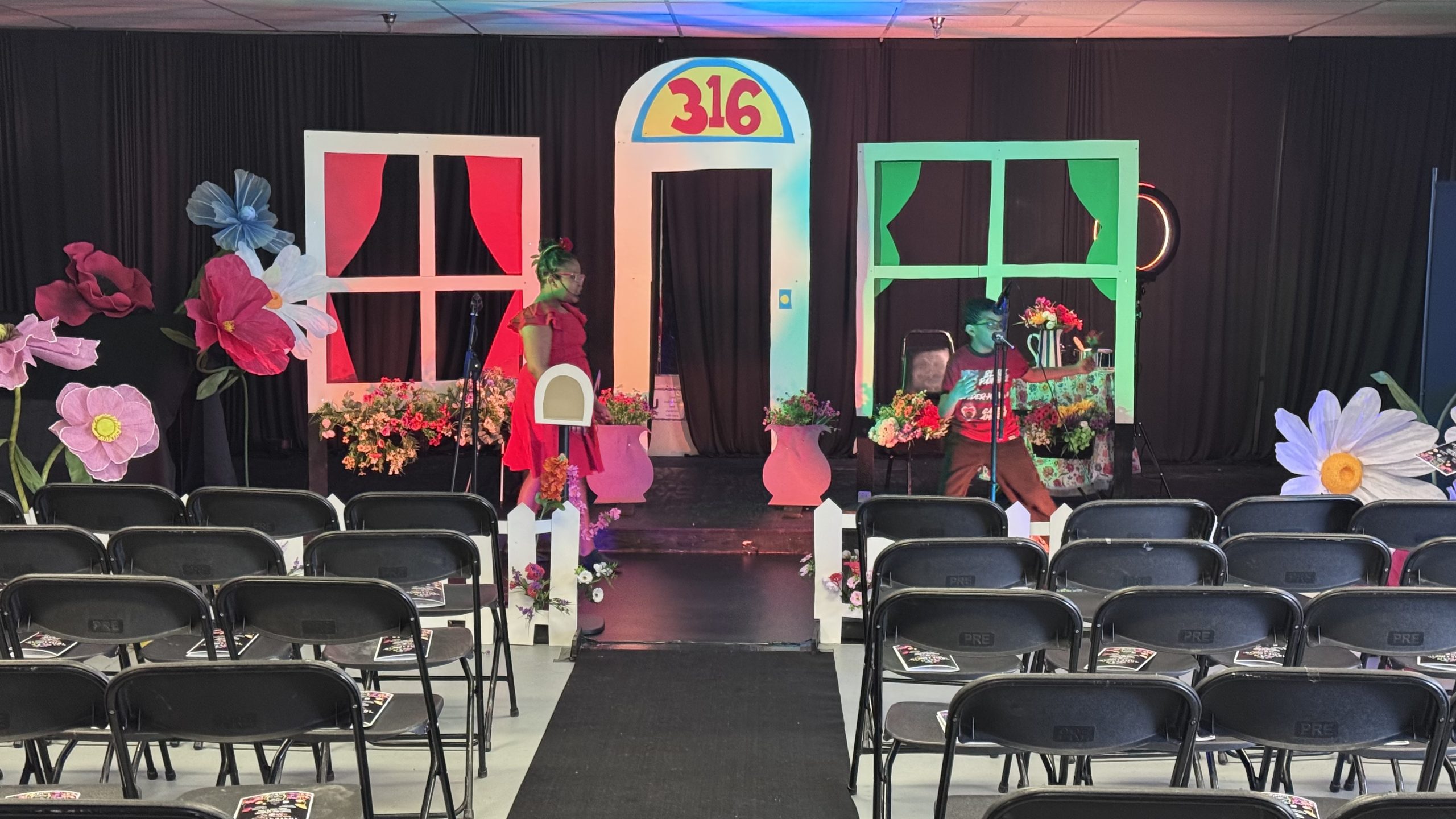
This past spring, I had the opportunity to work with an extraordinary group of young artists at Puretone Academy in Columbia, South Carolina. What began as a conversation about launching a Musical Theater School grew, quickly and organically, into an eight-week interdisciplinary process that culminated in a fully staged original musical.
I agreed to help Puretone on a volunteer basis. I didn’t want to make a long-term commitment, but I did want to support the idea of giving kids a space to explore theater holistically. We began with a series of free workshops designed to generate community interest and introduce students to musical theater through play. Those early sessions focused on theater-based activities that blended singing, dancing, acting, and imaginative exploration. The energy was immediate.
From those workshops, eight students signed up, ranging from fourth grade through middle school, along with two high school students who assisted with set design, sound, and lighting while also performing in the show. Over the next eight weeks, we met Mondays, Wednesdays, and Fridays for two to two-and-a-half hours each day. It was ambitious. It was joyful. It was a lot.
We began by diving into each discipline that makes up musical theater. We held acting classes, explored multiple dance styles (I even brought in a ballet barre), and spent time on creative writing. I introduced the students to obfuscation, working with gibberish as a way to free the body and voice from self-consciousness, which quickly became one of their favorite activities. We loved it so much that one of the characters in the play ended up with a fully gibberish name.
Much of the script emerged directly from the students themselves. I gave them prompts and questions and asked them to write poems, short reflections, and responses. They wrote about flowers. They wrote about school, what they loved and what frustrated them. They wrote about what their parents said or did that made them the most angry. All of this material became raw narrative clay.
Using the structure of The Wizard of Oz as a loose framework, I drafted a story about a young character who dreams of becoming a performer and, while sleeping, meets three characters who reflect different parts of that desire. At the same time, Whitney Weston, the owner of Puretone Academy, asked that the central theme connect to Martin Luther King Jr.’s “I Have a Dream” speech, as we began the program during Black History Month. We discussed the speech together and talked about what it means to have a dream—not only in a historical or political sense, but in the personal sense of wanting to be an artist, a performer, or a creator. That idea became the spine of the show.
The process was deeply interdisciplinary. I extracted emotional and thematic material from the students, integrated the theme provided by the academy, and wove those elements into a narrative that could live alongside Puretone’s musical mission. I choreographed most of the movement, while Ms. Weston and her assistant Erin prepared the students vocally. I wrote two original songs, the duet Sang Those Flowers and Blooming Voices, which Ms. Weston helped shape to ensure they sat comfortably within the students’ vocal ranges. I included Ms. Weston’s songs It’s a Musical and Victory as these were well-loved songs that many of the kids were familiar with from previous classes at the Academy. For the finale, we incorporated Dreams and Shakes, which aligned beautifully with Puretone’s mission.
Behind the scenes, I personally funded approximately $3,000 in materials, lighting, costumes, wigs, makeup, sound equipment, and built the set. I even designed and produced a 19th-century robe à la française for the production and purchased dance shoes (ballet, jazz, and tap) for each student to keep. Within seven weeks, we were stage-ready.
The performance itself was a single night, but it carried the weight of everything the students had explored together. After their final bows, we held a small awards ceremony. I had purchased trophies and a poster for the cast, and the students surprised one another with superlative awards they had created themselves. Then they surprised me. They presented me with flowers and a framed photograph of myself, covered in their signatures and handwritten thank you notes.
It was a profoundly fulfilling experience.
What stayed with me most was not just the final performance, but the process, the way the students learned to trust their voices, their bodies, and their ideas, and the way theater became a container for listening, dreaming, and collaboration. It reminded me why interdisciplinary, student-centered creation matters, and how much can grow when young people are given the tools (and the time) to imagine together.